Introduction to Global Systems and Importance in Your Professional Horizon
What is an ERP System?
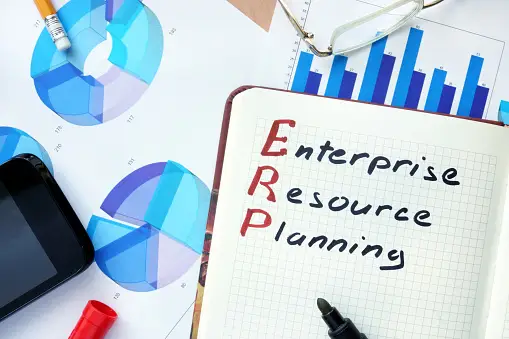
It is an operational enterprise platform that spans all business areas of large multinational corporations, integrating and managing documents and processes centrally.
Companies with an ERP system have the functionality to efficiently manage their Warehouse and Inventory, Purchasing, Quality Control, Planning, Production, Sales, Distribution, Finance, Cost Accounting, Treasury, Maintenance, Research and Development, Human Resources, and other areas—all managed by the Information and Communications Technology (ICT) department—with the goal of improving efficiency and decision-making within the organization.
In Mexico, there are more than 15,000 corporations (opportunities) that also operate in Latin America and the rest of the world.

What is SAP ERP used for?
The world is governed by several global systems that emerge, grow, and eventually disappear over time.
Some ERP systems have stood out for adapting to the growing market, including Microsoft, IBM, Oracle, JDEdwards, Baan, PRMS, and SAP, among others.
SAP is the most widely used, most in-demand, highest-paying, and fastest-growing enterprise resource planning (ERP) system in the world. Founded in July 1972, it has been growing for 52 years, with 25 years in Latin America and 20 years in Mexico. Headquartered in Waldorf, Germany, it is now the world’s leading producer of business management software, operating in more than 200 countries.
Currently, SAP ERP offers a graphical interface through the cloud platform SAP Fiori.
SAP is constantly developing solutions for processing and streamlining activities within organizations.
What is a multinational company?
In Mexico, there are more than 15,000 multinational companies, which are corporate organizations that operate autonomously, privately, and independently in several countries, offering products and services through multiple channels, markets, and countries other than their headquarters.
In Mexico, as in Latin America, Europe, Asia, the Middle East, and North America, 20 industries stand out.
Each industry contains several hundred corporations known for their prestigious brands, representing opportunities for you with options and markets to efficiently operate the ERP system in various roles such as Analyst, User, Operator, Assistant, etc., across every area of the business.


What is the difference between a multinational, transnational, and corporate company?
Multinational Company: Operates in several countries, adapting to local conditions. Each country has its own regulations and product variations.
Transnational Company: Seeks greater global integration and coordination, working in an integrated manner across different locations. It leverages different units and standardizes certain processes and products globally.
Corporate Company: Operates in different countries and coordinates global operations. It can be multinational or transnational depending on its requirements and the efficiency of its processes.
In the German ERP system, you will find the Organizational Structure that you will learn and master when you complete the “ERP Processes Workshop” (R).
What are the business areas of a corporate company?
Business areas vary depending on the industry and strategic approach.
1. Operations and Production: Production and supply chain management.
2. Marketing and Sales: Strategies for promoting and selling products or services.
3. Finance: Management of financial resources and accounting.
4. Human Resources: Personnel management.
5. Business Development: Innovation of new technologies and products.
6. Customer Service: Customer service and support.


What is Systems Consulting?
A field of professional consulting specializing in the design, implementation, and optimization of computer systems, such as SAP.
Consultants in this area are technology professionals with the purpose of diagnosing and resolving issues.
Who is involved in the SAP field?
Clients: Companies and organizations that use SAP software.
Consultants: SAP consultants are professionals with experience in implementing, configuring, and maintaining SAP systems.
External Participants: This refers to individuals who come seeking to learn how the SAP system works, whether through an educational institution or independently.

What is TPERP?
The TPERP “ERP Process Workshop” is an initiative born from the urgent need to cultivate talent in several developing countries. It trains participants interested in updating their knowledge and efficiently operating key processes in logistics and finance business areas, such as IT, Inventory, Purchasing, Planning, Production, Sales, Distribution, Quality Control, Finance, and Cost Accounting.
Patented in 2013 by ANMEC, A.C. with the STPS (Mexican Ministry of Labor and Social Welfare) and IMPI (Mexican Institute of Industrial Property), TPERP is licensed for training key users, super users, operators, support staff, and analysts through its subsidiaries Curso-SAP and CapacitacionEnfocada.
Aligned with the UN’s 2030 Sustainable Development Goals, we address and contribute to SDGs 4, 8, 9, 10, 12, and 17.
What are the objectives of the TPERP?
Developing and certifying talent and experience by solving problems in highly specialized industrial settings within specific industries that address productivity and employability issues in Mexico and Latin America, and NOT focusing on the tool itself, as the market imagines and as currently exists with the manufacturer, which, of course, comes at a high cost outside the non-profit scope of ANMEC, A.C.
At the end of the “ERP Processes Workshop,” participants will describe the business areas and processes of corporations and effectively demonstrate the creation of PTM, PTP, and OTC objects, documents, orders, and transactional data within the context of improvement and operational projects for the global technology platform. This will be achieved using the SAP system, following instructions from the project leader, in front of a group, and in the areas of Data, Purchasing, Planning, Production, Sales, Distribution, Finance, and Cost Accounting. Copyright ANMEC, A.C.


Who is the TPERP aimed at?
The “ERP Processes Workshop” is designed for users, assistants, analysts, and operators from various business areas, as well as coordinators, department heads, managers, and directors of key business areas within organizations. It is also relevant for IT professionals, project managers, and, in general, accountants, warehouse managers, administrators, university professors and lecturers, and anyone who needs to operate and master the current technological platform to meet business needs and enhance their employability.
What is the duration of the TPERP Webinar?
1. Social Support Programs Option:
In our Social Service and Professional Internship and Residency programs, agreed upon with AECHAC, A.C. and through collaboration agreements with 22 universities, the Processes Workshop is delivered over 6 months or 500 hours of Immersion, Development, and Deliverables. One to two hours daily, Monday through Friday, in morning and afternoon sessions. NRDA and free of charge.
2. Social Networks Option:
The Processes Workshop lasts 40 hours and is delivered in seven intensive Saturday sessions at 9:00 AM or 4:00 PM CST. A fee applies for access to the educational platform for 8 weeks.
3. Corporate Option:
The duration of each training session will depend on the Assessment or Examination that the Civil Association provides to corporations to review their processes free of charge and determine a customized approach based on the type of industry, the simplicity or complexity of their processes, operational scenarios, and the use cases involved in the requirement. *In this option, the vast majority of cases are channeled to partners or “associates” that meet the size, credentials, and adequate support requirements from the manufacturer.


What topics does the TPERP cover?
Updated 2024 Course Outline:
• Session 0 – Navigation and Master Data
• Session 1 – Master Data in the German ERP
• Session 2 – Inventory Processes with the ERP
• Session 3 – Purchasing Processes with the Global ERP
• Session 4 – Production Planning and Control
• Session 5 – Sales and Distribution Processes
• Session 6 – Finance and Cost Processes
• Session 7 – Final Certification Exam as a User, Operator, Assistant, or Analyst of the German ERP (SAP Analyst).
How can TPERP help me in my work?
The “ERP Processes Workshop” (R) significantly increases your chances of being hired as an SAP collaborator in SAP Business Analyst roles for project implementation, as well as for User, Operator, Assistant, and Analyst roles in each of the seven business areas mentioned, encompassing 28 roles and positions in corporate environments. This also includes additional roles with the same descriptions for Technical Support and AMS activities, across some of the 15,000 corporations in Mexico and Latin America alone.
Your performance during the transformation process, training, and deliverables will determine your score on the announced final certification exam. Based on your score on the 2024 Final Exam, the Certificate you receive will indicate your level of certification, reflecting your performance and demonstrable experience in various industries:
User: Understood the processes, can describe them, and operate them in one area.
Operator: Understood the processes and specialized with sufficient practice in one or two processes within the TPERP (R) curriculum.
Assistant: Capable of working in one or more logistics areas covered in the TPERP® syllabus. Makes some decisions at the typical junior level in corporate settings, assisting other operators and users. Understands, manages, and efficiently develops transactional data.
Analyst: Possesses all of the above, plus extensive knowledge and mastery of process integration (2024), demonstrated through practical exercises, deliverables, testimonials, and a final exam score of 80/100. This is the ideal role that companies seek and fill most quickly, as it saves them learning curves and reduces the time and costs associated with internal and external training.


Which languages are available for TPERP?
1. Carefully review the Study and Work Plan proposed by ANMEC, A.C. and its subsidiaries, curso-sap and capacitacionenfocada.
2. Thoroughly review the manuals and learning materials provided in the 24 hours prior to each session.
3. Pay close attention to the activities carried out by the consultants during the seven sessions.
4. Complete all assigned tasks during the 7 sessions in the social media format or during each meeting in the social media format.
5. Although the exam is optional, confirm your interest in certification by registering for the Final Exam to certify your knowledge and validate your work experience.
What prior knowledge do I need to take the TPERP course?
The TPERP is available in Spanish and English.
This covers 100% of the languages spoken on the planet, as recent research indicates that all European, Asian, and African/Oceanic countries speak English at a high rate. Latin America is no exception.
The course is offered in Mexico 100% in Spanish on Saturdays.
Starting in April 2024, the webinar will be offered in the US and Canada 100% in English. Starting in January 2025, the “Process Workshop” will be offered only in English, and simultaneous translation into Spanish will be provided by current providers such as Zoom, Teams, etc.


What are the principles of TPERP for the innovation of new technologies?
1. Improved Workflow: Optimize and enhance existing workflows to ensure greater efficiency and productivity. The SAP ERP Ecosystem utilizes AS-IS, TO-BE, FIT-GAP, FRICEW methodologies and building blocks for each industry type. This is a UNIQUE STRENGTH worldwide that you must learn in the Process Workshop and take advantage of!
2. Process Streamlining: Simplify and optimize business processes to eliminate redundancies and improve efficiency.
3. Comprehensive Management: Integrate inventory management, order processing, accounting, HR, and other key functions into a coherent system.
4. Process Streamlining: Accelerate and simplify all business processes using proprietary methodologies and trade secrets revealed only through project participation and hands-on experience once you become fully integrated into the ecosystem!
How is my personal information used?
Please review our Privacy Policy at http://anmec.org/privacy. In our organization, your personal information collected for the TPERP is used solely to provide you with the best service, access to webinar information, and access to webinar tools. We also use it to send you communications related to our program and its progress, to improve educational quality, and in certain cases, for statistical purposes.
We apply privacy and data handling policies in accordance with international regulations, which can be found at our link.

Which terms of service require your attention and vigilance during the delivery of the TPERP?
The “ERP Processes Workshop,” being an integration of technologies, hardware, software, human resources, and intangible experience transmitted through demonstrated practice and implemented at the enterprise level, contains significant and specialized industry data. Therefore, even though its primary objective is to be a learning system, we apply the following important conditions that users must review and accept in our global Form “B,” entitled “Conditions and Use of the Virtual Room”:
#Review at all times:
• 1. The privacy and data protection of the user and other participants in Sessions and Meetings.
• 2. The industrial and intellectual property displayed, preventing information leaks to third parties that could jeopardize their own information security.
• 3. Access to previous or future records, in accordance with their practices.
• 4. The acceptance and registration of users to use the information provided.
• 5. The content used and created by each user or users who have permission to use the software. (R) All rights reserved by SAP AG and all participating brands mentioned before, during, and after the service provided.
Use of these brands for any commercial, business, or educational purposes is PROHIBITED without the prior authorization of the manufacturers.